


To understand why safety depends on security, consider what happens when a physical trackside perimeter fails. It removes the boundary between a controlled railway environment and the public, creating an immediate safety risk. Railway operations rely on the assumption that the line is clear of people and obstructions. When that perimeter is breached, trains must be slowed or stopped while visual inspections are carried out, causing significant disruption across the network. Across the UK rail network, there are around 19,000 incidents of trespass each year, resulting in approximately 750,000 minutes of train delays and costing taxpayers around £75 million annually. These delays represent not only a significant financial burden but also demonstrate how quickly a security failure can become a safety issue.
Delay minutes often attract the headlines because of their commercial impact, but the greatest concern is the risk to life. Trespassers face obvious dangers from high-speed trains and overhead line equipment, while route crime such as cable theft can disrupt signalling and other safety-critical infrastructure. Items thrown onto the railway or at moving trains also put passengers, train crews and offenders at risk. Without effective security, safe and reliable rail operation is not possible.
The focus should not simply be on responding to intrusions, but preventing them from happening in the first place. As train frequencies increase and expectations around network performance continue to grow, preventing unauthorised access has become just as important as responding effectively when an incident occurs. Perimeter security should therefore be considered as part of the wider rail safety strategy, rather than simply a boundary marking the edge of the railway.
Providing effective protection across such a large and often remote estate is not straightforward. Traditional boundary demarcations, such as chain-link and timber post-and-wire fencing, were designed to define boundaries rather than resist modern security threats. Today, many of these legacy systems no longer meet operational requirements. They can be breached using basic hand tools and often require more maintenance over time. Even traditional steel palisade fencing, widely used for security, has its limitations. Fixings can be removed to slide pales aside before being returned to their original position, leaving little visible evidence of a breach. This creates a safety risk because someone could be inside the railway boundary without being detected, while confirming a breach often requires manual inspection.
Handheld power tools continue to become smaller and more powerful, making traditional chain-link systems increasingly vulnerable. At the same time, CCTV and drone technology are being used more widely to inspect and monitor rail infrastructure. Perimeter systems therefore need to resist modern methods of attack while making damage or attempted breaches easy to identify.
Technology and operational practices continue to evolve, so perimeter security must do more than meet minimum compliance. Increasingly, specifiers are looking beyond security ratings alone. They also consider how a system performs throughout its service life, including inspection, maintenance and long-term durability. For many rail applications, expanded metal mesh is well suited to these requirements, combining high security performance with long-term reliability.
Inspection is also becoming a more important part of the specification process. Perimeter systems should support CCTV, drone surveys and routine visual inspections by making damage or attempted breaches easy to identify. This improves maintenance planning and reduces the amount of time engineers spend trackside. Expanded metal mesh is particularly effective in this respect, providing clear visibility for CCTV and routine inspections.
A range of perimeter systems are used across the rail network, each with characteristics that should be considered during specification. Security performance is only one part of the decision. Durability, corrosion protection, maintenance requirements and suitability for the operating environment are equally important.
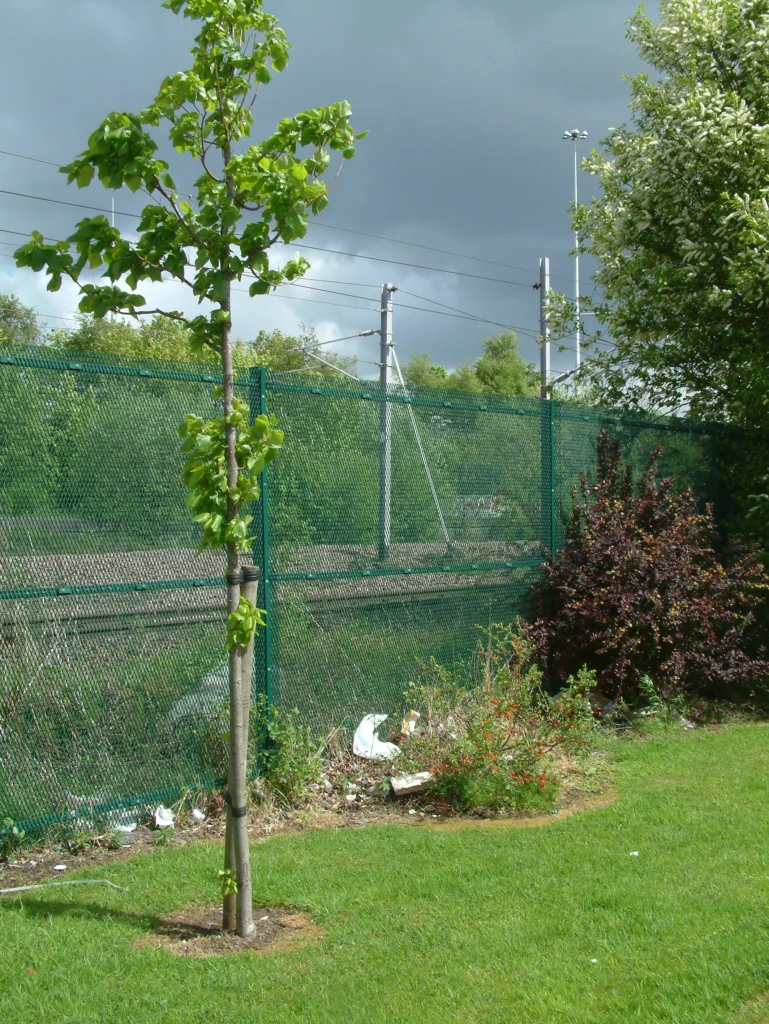
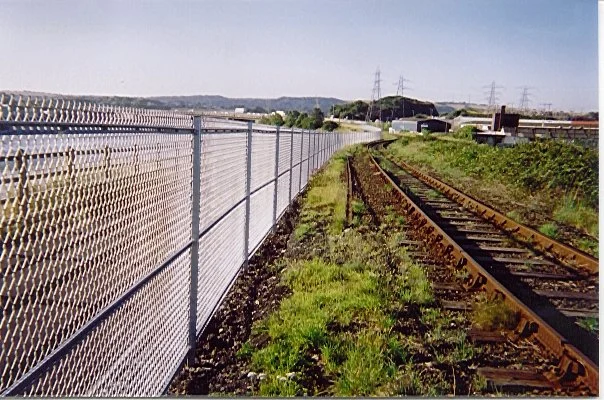
Expanded metal mesh has several characteristics that suit demanding rail environments. Its diamond-shaped pattern limits toe and finger holds, making climbing more difficult. Because it is formed from a single piece of metal rather than welded together, there are no welded joints that can become weak points. It also takes longer to cut through because more material has to be cut, increasing the time needed to breach the perimeter and the likelihood of detection.
Expanded metal mesh may have a higher initial purchase cost than some comparable alternatives, initial purchase costs are not the only thing that should be taken into account. With Network Rails budgets being increasingly directed towards maintaining its existing estate, it is essential that whole life performance is considered. . Systems that require little maintenance and continue performing for many years can reduce future interventions, minimise workforce exposure and provide better long-term value.
The rail environment presents unique installation challenges. Work is often carried out during short possession windows, on steep embankments or in remote locations with limited access. Every visit trackside introduces both cost and risk, so perimeter systems should be quick to transport, install, inspect and maintain. Reducing the time engineers spend on or near the railway improves both safety and efficiency.
Design also has an important role to play. Modular construction makes materials easier and safer to handle, while systems that can rake over uneven ground reduce the need for stepping and the additional work required to close gaps beneath the fence line. Where access behind the fence is restricted by adjacent landowners, dense vegetation or difficult terrain, the ability to install and maintain a system entirely from within the rail boundary offers clear operational advantages.
Installation itself introduces another important safety consideration. Moving fencing materials down steep cuttings or through narrow access points can create significant manual handling risks. Smaller, more manageable mesh panels or pales help reduce those risks while lowering the chance of materials falling onto the line. They can also make installation quicker and more efficient, helping to minimise the time spent working trackside.
As a specialist manufacturer of accredited expanded metal mesh perimeter fencing, gates and security systems for the rail industry, ExMesh Engineering has seen these challenges first-hand. That experience has shaped the development of systems designed around the practical realities of the rail environment, supporting both security performance and safer installation practices.
As rail networks increase train frequencies, adopt higher operating speeds and transition towards automated signaling and electrification, the tolerance for trackside intrusion continues to reduce. Perimeter security can no longer be viewed as a simple boundary or a passive barrier. It is a safety-critical asset that protects people, infrastructure and the reliable operation of the railway. Choosing the right perimeter security is not simply about improving security. It is about creating a safer, more resilient and more reliable railway.


